
The Parkinson's is a neurodegenerative disease Characterized by the progressive development of a series of movement disorders that have a major impact on patients' quality of life - Specifically: generalized slowness of movement , balance problems, and blocks in walking.
Although, to date, there is still no care able to halt the progression of the Disease, physicians and rehabilitators recommend a healthy and active lifestyle (in combination with traditional drug therapies) to patients to improve the management of some specific symptoms.
The benefits of physical activity on Parkinson's symptoms
When performed consistently, sports activity can give surprising benefits, as evidenced by recent scientific studies and the growing interest on the part of physicians and therapists in organizing initiatives aimed at addressing patients toward a more active lifestyle.
Doing physical activity is important for parkinsonian patients, as pointed out by Dr. Alfredo Berardelli, president of LIMPE Foundation for Parkinson's Disease Onlus. and neurologist at Sapienza University of Rome:
«In the early stage of the disease, those who already played sports are encouraged to continue doing so. At an advanced stage, specific rehabilitation acting on walking and balance is required.»
But what are the best activities to counteract the motor symptoms commonly associated with the Disease?
In general, any exercise that requires the coordination of large, rhythmic movements a proves effective in counteracting the rigidity, one of the first motor symptoms to appear in the development of the Disease. Therefore, we welcome the classes of dance, gentle gymnastics, tai-chi, yoga and pilates. All these sports, in addition to strengthening muscles and increasing coordination, also positively affect balance and stability, making patients more confident in their daily movements even outside the gym.
To improve the resistance and keep the heart exercising, it is also possible to combine an aerobic exercise component with the patient's exercise plan, of course after assessing his or her individual motor skills. Among the many aerobic activities that can be carried out without risk in old age are. running, swimming, tennis but also long walks with friends, to be recommended especially with the arrival of warm weather. A growing number of studies show the enormous benefits that consistent aerobic activity is able to produce on the structure of the brain, its metabolism, and cognitive function, both in elderly individuals and in patients with neurodegenerative conditions.
Finally, let us remember how important it is to vary the activity introducing ever new exercises that go to stimulate the patient's cognitive sphere. In fact, Parkinson's sufferers are well aware of the difficulty that the Disease entails in making the transition from one activity to another or performing two activities simultaneously (an exercise called, in technical terms, dual tasking). Again, sports and movement can help keep the brain in training as well, positively affecting the quality of life Of the patient.
- Matura, S., Fleckenstein, J., Deichmann, R. et al, Transl Psychiatry 7, e1172 (2017). https://doi.org/10.1038/tp.2017.135
- Ahlskog JE., Neurology. 2011;77(3):288-294. https://doi.org/10.1212/WNL.0b013e318225ab66
- Cammisuli, Davide Maria et al, Antioxidants (Basel, Switzerland) vol. 9.5 380. 5 May. 2020, https://doi.org/10.3390/antiox9050380
Based on this, the most recommended sports for Parkinson's sufferers are as follows:
- Walking outside or in a shopping mall
- Dance
- Yoga Lessons
- Tai Chi Lessons
- Show jumping
- Marching in time to music with big arm swings
- Ping Pong
- Golf
- Tennis
- Volleyball
- Aerobics classes
- Treadmill walking by changing speed and incline
- Hiking with walking sticks
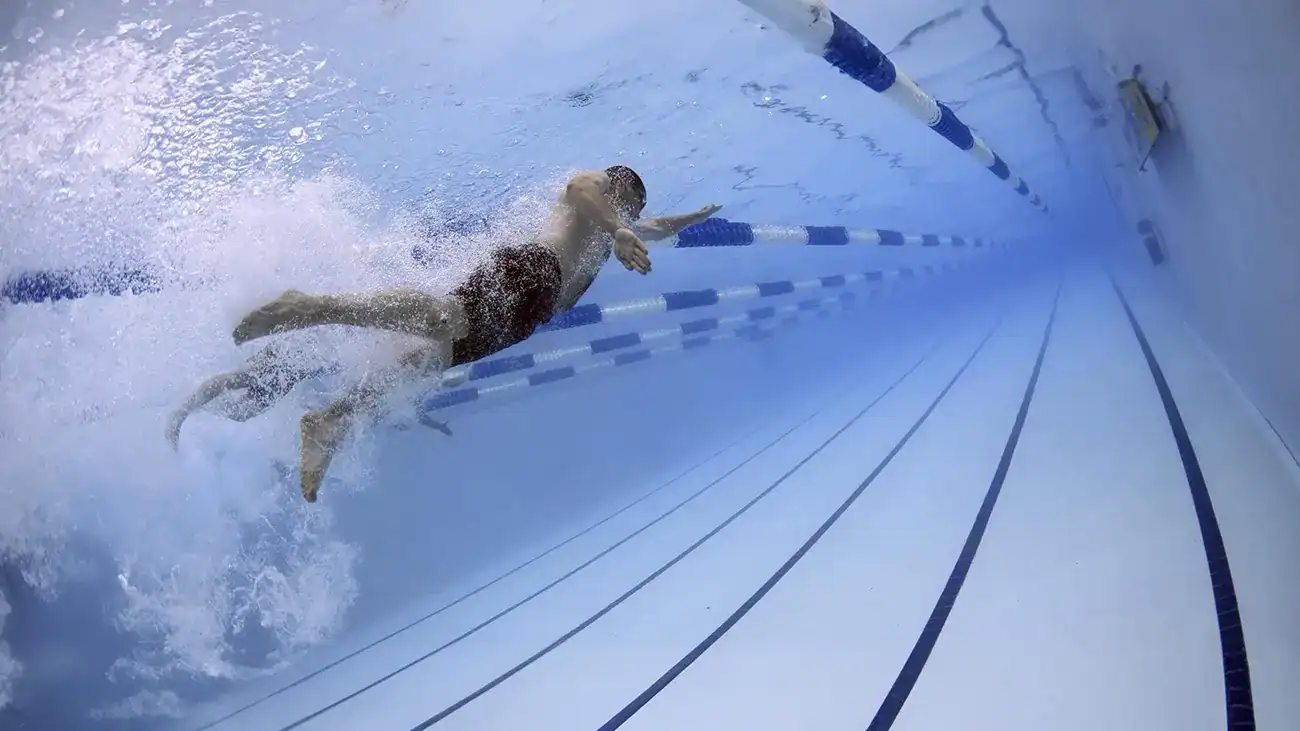
- Swimming in different styles, with eyes open and closed, not only challenges motor learning, but also increases heart rate and provides good cardiopulmonary conditioning.
Are there any sports not to play when you have Parkinson's?
Experts say that while there are no sports that should be discouraged for Parkinson's Disease patients, there are activities that should be done with a few more cautions than the norm to be truly effective in countering the specific symptoms of the condition.
Constituting a mechanical repetition of movement, for example, the exercise bike per se is not a recommended exercise when you have Parkinson's. However, just by pairing it with another activity (such as watching a movie or reading or doing crossword puzzles), it can increase the challenge toward the patient and turn it into an excellent opportunity to improve skills in dual tasking.
Also the treadmill, in its monotony of movement, offers the patient no chance to improve balance and stability, despite requiring a great deal of strength and energy. Rather than a long treadmill session in the gym, a short run or a walk of medium duration in the open air is recommended, where the foot is continually stressed by varying terrain and the cognitive sphere kept active by countless unpredictable elements. In the colder season, when going outside might be difficult for the patient, one can still use it perhaps by varying the speed and inclination of the mat frequently during the workout.
Gondola AMPS therapy as a support for a more active lifestyle
Clinical studies* prove that Gondola® AMPS acts directly on some of the motor symptoms most frequently associated with Parkinson's Disease, improving gait quality and balance from the very first session.
Major stability and ability to move are two key factors that offer concrete support to the patient, allowing him or her to complement his or her treatment plan with the inclusion of sports activities such as those just mentioned, which not only provide excellent exercise for the body but also represent a moment of diversion from everyday life.
Move safely, exercising regularly through a range of varied activities and always stimulants is the secret to improving one's physical health without ever getting tired, a circuit that is self-powering and undoubtedly results in great benefit to the patient's quality of life.
If you are interested in learning more about AMPS therapy and the benefits it can bring to your journey already after a single session, you can contact +39 02 97070 465 if you are calling from Italy or +41 91 921 3838 if you are calling from Switzerland. You can also write to info@gondola-medical.com or fill out the form below.

 Italiano
 Français
 Deutsch
 English