

The place where we live, with its level of pollution and noise, can influence the development of Parkinson's disease.
How does the air we breathe affect Parkinson's disease
Life in urban areas, often hectic and chaotic, brings with it two unwelcome companions: air pollution and traffic noise. In recent years, the scientific community has begun to investigate more closely the possible link between these environmental factors and the increased risk of Parkinson's disease.
A study conducted by Utrecht University and published in. Environmental Epidemiology, surveyed more than 50,000 people in Europe, analyzing exposure to nitrogen dioxide (NO₂), PM2.5 fine particles, and road noise levels. The results speak for themselves: for every 10 µg/m³ increase in NO₂, the risk of developing Parkinson's increases by 26%, while a 10 dB increase in noise-especially at night-corresponds to a 15% increase in risk.
These data reinforce the idea that environmental factors, along with genetics and lifestyle, may influence the onset of the disease, exacerbating already complex symptoms such as walking difficulties and sleep disturbances.
The Italian case: the study in Molise
The link between pollution and Parkinson's has also been investigated in Italy. Lo Moli-sani study, sponsored by IRCCS Neuromed as part of the Age-It - Spoke 3 program, has followed more than 24,000 people over 35 years old residing in Molise for a full 12 years (from 2006 to 2018). The researchers monitored exposure to various pollutants, such as nitrogen oxides, ozone and PM10.
The results showed that areas with higher air pollution experience a higher incidence of the disease. In particular, fine particulate matter is confirmed as a major risk factor. This Italian research conducted by Dr. Licia Iacoviello, director of theNeuromed's Epidemiology and Prevention Unit., highlights how the environment can affect Parkinson's symptoms and points to the need for increased prevention to reduce the exposure of those suffering from the disease to these pollutants.
Traffic noise and Parkinson's disease: an emerging link
Traffic noise is more than just a nuisance. Also according to the Dutch University's 2023 study mentioned earlier, prolonged exposure to traffic noise could increase the risk of developing Parkinson's disease. A risk that increases during the night, when sleep is compromised, possibly affecting motor control and cognitive function.
This finding also brings to light an issue of environmental justice: people who live in highly trafficked areas-often less privileged neighborhoods-are at greater risk, and in some cases also have less access to timely diagnosis and targeted treatment.
The benefits of contact with nature.
While pollution and noise pose real threats, nature offers a healthy escape route. A 2022 U.S. study, published in JAMA and released by the Italian Society of Neurology, showed that exposure to natural environments can reduce the risk of hospitalization for Parkinson's patients.
The NDVI index, which assesses the percentage of green areas and blue spaces in relation to population density, showed a 6% decrease in the risk of hospitalization for people with the disease.
Professor Alfredo Berardelli, president of the Italian Society of Neurology, he commented: “Until now, there had been conflicting data on the effectiveness of exposure to so-called green spaces in protecting against various neurological conditions, while several recent studies have shown that these environments exert a genuine therapeutic action.”
Moving in nature: a panacea for Parkinson's disease
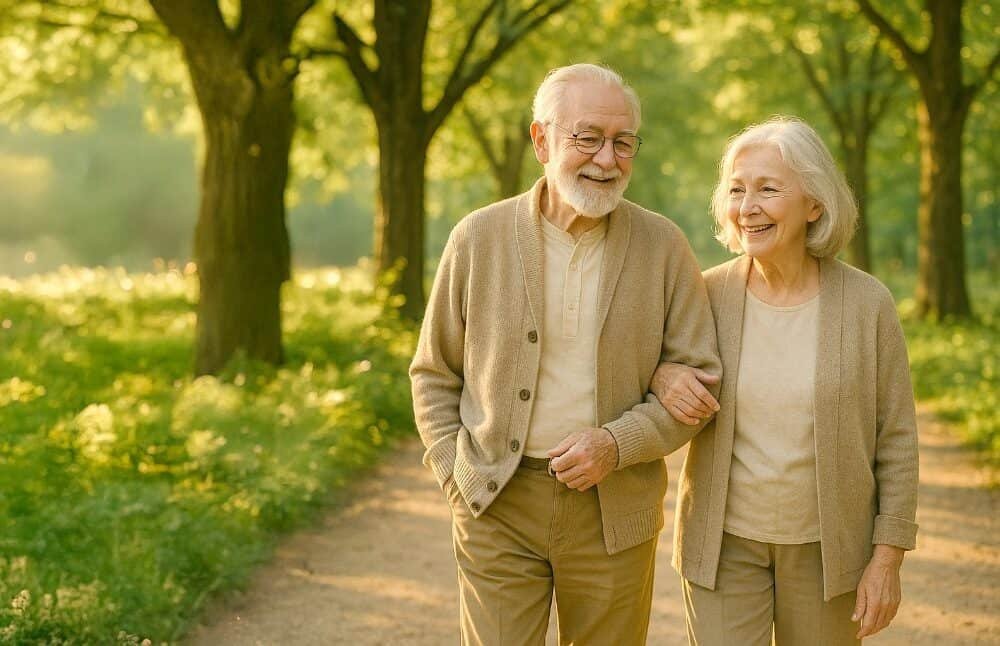
Spending time outdoors, taking walks in good company and in contact with nature, thus becomes a healing gesture that can make a difference for those living with the disease. Not only for emotional well-being, but also to counteract movement problems in Parkinson's, such as freezing and loss of balance.
Therapies such as AMPS of Gondola, which act directly on motor circuits through sensory stimulation, can restore confidence and stability. This allows patients to regain the pleasure of moving in nature, facing walks with more serenity and less fear of falling.
In an environment where air pollution and road noise pose a real risk, even a few hours spent in a healthier environment can improve the quality of life of Parkinson's sufferers. Not only from a psychological point of view, but also from a neurological one.
Sources:
Traffic-related air pollution, road traffic noise, and Parkinson's disease: Evaluations in two Dutch cohort studies, 2023.
https://pubmed.ncbi.nlm.nih.gov/38912395/
Parkinson's and air pollution, correlation confirmed, 2024.
https://www.corriere.it/salute/neuroscienze/24_settembre_25/parkinson-e-inquinamento-atmosferico-confermata-la-correlazione-5baefb95-72c2-4d00-9f28-29be0d52dxlk.shtml
Italian study shows a relationship between pollution and Parkinson's disease, 2025.
https://www.sanitainformazione.it/one-health/uno-studio-italiano-mostra-una-relazione-tra-inquinamento-e-parkinson/#:~:text=Dalla%20ricerca%20%C3%A8%20emerso%2C%20in,informazioni%20contenute%20nei%20database%20sanitari
Epilepsy and hearing loss as early predictors of Parkinson's disease, 2022.
https://neurologiaitaliana.it/2022/epilessia-e-perdita-di-udito-come-fattori-predittivi-precoci-di-parkinson/#:~:text=L’insorgenza%20della%20malattia%20di,College%20di%20Londra%20e%20colleghi.
Parkinson's disease: exposure to natural environments may reduce the risk of hospitalizations, 2023.
https://www.osservatoriomalattierare.it/malattia-di-parkinson/19711-parkinson-l-esposizione-ad-ambienti-naturali-puo-ridurre-il-rischio-di-ospedalizzazioni#:~:text=L’indice%20NDVI%20(che%20valuta,un%20calo%20del%20rischio%20di
Associations of Greenness, Parks, and Blue Space With Neurodegenerative Disease Hospitalizations Among Older U.S. Adults, 2022
https://jamanetwork.com/journals/jamanetworkopen/fullarticle/2799727

 Italiano
 Français
 Deutsch
 English