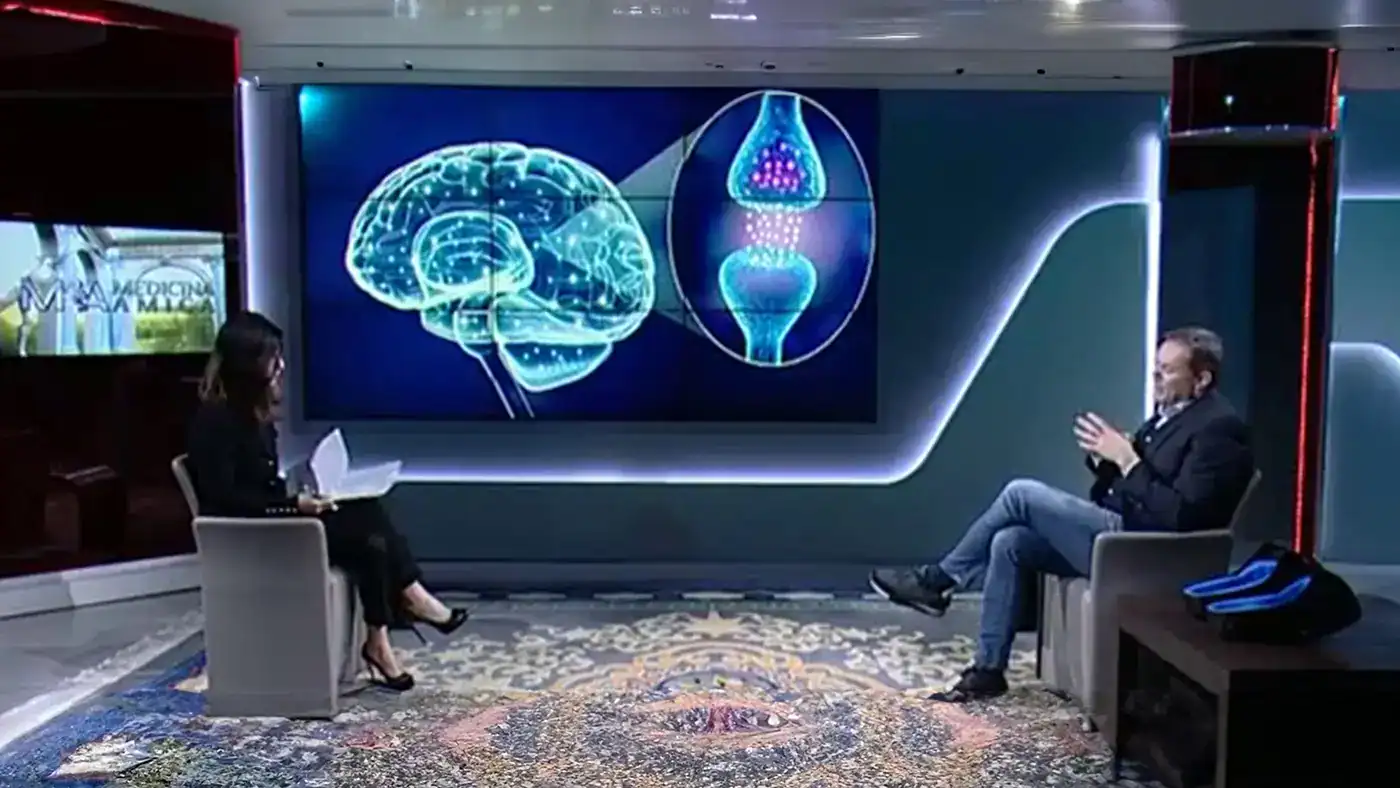
Our movement originates from the interaction between brain, nerves and muscles. When there are interruptions or problems in communication, the movement disorders, as difficulty of the path and engine blocks.
Movement in the human body: how it works
Our brain activity is based on the movement of neurons; from birth we acquire information that leads us to develop cognition on the basis of which we develop movements, which over time become automatic. Just thinking about being able to raise an arm, open a hand and close it implies 15% of our brain effort. The our brain is an almost perfect machine, where each area has a distinct function. If a patient is particularly slow or uncoordinated there may be something going on in the brain that is not working: something in the interaction between brain, nerves and muscles is not going as it should. Multiple areas are involved in movement among them are:
- l’premotor area: which is used to anticipate movements
- l’visual-spatial area: which tells us “how big we are,” that is, how much space we have around us, so whether in that space we can perform a given movement
How neurorehabilitation is changing
The task of the rehabilitator until now was to try to figure out how to use the compensation areas of the damaged areas so as to bring improvement to the patients“ quality of life. Normally the motor areas are used to move, but in the parkinsonian patient to compensate for their damage the voluntary areas are used involving a great deal of effort on the part of the patient who claims to ”walk as if he had boulders on his feet.".
In fact, compensation areas are only a ruse to circumvent movement disorders and are not enough to restore patients' autonomy, so studies were conducted to find a way to act directly on the movement areas.
Until 20 years ago it was believed that the brain, the central brain system, was completely in charge of our body. If a problem arose at the central level, it was thought that there could be no improvement except by going to surgical action directly on it. Whereas in our days it has been possible to observe that the peripheral brain system, if stimulated in a certain way, is able to send an impulse to the brain that can activate certain areas involved in movement generating an improvement in motor disorders that lasts from 3 to 5 days.
Years of study to find neurorehabilitation therapy
At first there was an observational phase because there was a need to field something different. By reconstructing the mapping of the brain and peripheries, studying the phenomena on the motor areas of our patient, analyzing which peripheries were no longer moving, it was possible to observe that some motor areas were completely stopped. This happens because the brain having little energy prefers to conserve it for more vital movements, such as beating the heart and breathing, almost completely abandoning the extremities (hands and feet). The peripheries received the stimulus but it failed to reach the brain. The research was very empirical, various stimuli were tried and various hypotheses were developed, for example it was considered it might be pain that reactivated the inactive motor areas of the brain. Over time, however, it was observed that painful stimulation rather created a retraction, so the brain could not store this information.
The stimulus that reactivates motor areas
After several attempts, the right stimulus that could reach the brain and reactivate the areas involved in movement: premotor area, visuspatial area and basal ganglia was identified, including through observation by CT scan. Moreover, this stimulation at two points on the feet, delivered by the Gondola medical device, not only reactivates the areas but the brain is able to acquire the information and retain it for a few days (2 to 5 days). Obviously, this is not a cure, but a therapy to complement the others: medication, rehabilitation and possibly DBS.
Gondola has not defeated Parkinson's, but it has markedly improved the quality of life of Parkinson's patients.
Some of our patients (patients with parkinson's) who have been using the Gondola device for more than 8 years continue to use it with excellent results, showing that over time there is no addiction. In addition, the 95% of patients who have been using the device for at least 3 years have not had to increase drug therapy, keeping it stable.
ICTUS and Gondola Treatment
La therapy with Gondola is also demonstrating benefits on stabilized stroke patients. Following a stroke episode, the patient is diagnosed with 6 months of recovery, which is a period during which through good rehabilitation he or she can recover motor skills damaged by the ischemic episode. After these months, the patient is referred to as “stabilized” and will have to focus mainly on maintaining the improvements achieved during the rehabilitation period.
Gondola is proving effective precisely in improving movement in stabilized patients who have suffered an ischemic event for more than 6 months, improving their walking speed and decreasing spasticity.


 Italiano
 Français
 Deutsch
 English